Story
How I bootstrapped DesignLumo to an exit, part-time with $0 on ads
DesignLumo was my first real product, and my first exit. I built it alone, part-time alongside a full-time job, and it never had a marketing budget. It still grew to around $400 in monthly recurring revenue and $1.5K+ in total revenue before it was acquired.
This is how that happened, and what I learned along the way.
The problem: AI images you can't edit
By 2025, AI was already generating good-looking images. The trouble started the moment you tried to change one. Ask it to fix a single area and something else in the image breaks. You can't move one piece of text, swap a color or nudge a single element on its own, because the whole design is one flat picture.
I kept running into this myself. So the question became simple: why can't we build something that is truly editable? Not AI replacing the designer, but AI and a human working on the same design together. The AI does the heavy lifting, and you stay in control of every detail.
I started building DesignLumo in August 2025, for small businesses and marketers.
Building it part-time
My first plan was a mobile app, but I pivoted to the web. I was working a full-time job the whole time, so DesignLumo was a part-time project, and the first version took about two to three months to build.
The idea was easy to say and hard to build: describe a design, get a few styles back, and then actually edit the one you like. Every result is a real layout with separate text, colors and elements, not a flattened image. Brand kits keep everything on-brand, and you can export to PNG, JPG, WebP, SVG or PDF.
The hardest part by far was making AI output editable: turning what a model generates into structured layers, then building the editor logic on top so every piece behaves the way a designer expects. The stack was React and Express, with Fabric.js powering the editor and Gemini and the OpenAI API doing the generation.
The first customer was a stranger in Ireland
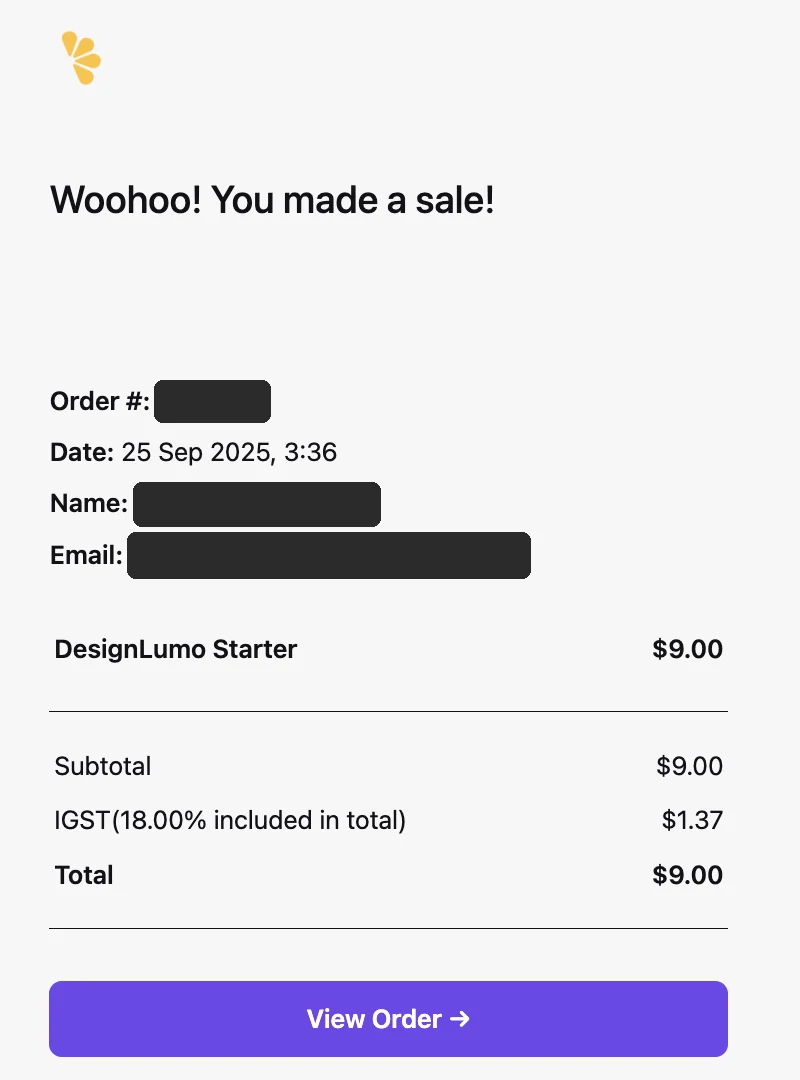
My first paying customer wasn't a friend or someone from my network. It was a complete stranger from Ireland. That felt really good: someone I'd never met found the product, trusted it, and paid for it.
Growing with $0 on ads
I didn't spend anything on marketing. Growth came from three organic channels:
- A Product Hunt launch
- SEO
It took around four to five months to reach about $400 MRR, built entirely on those channels.
The exit
From there, DesignLumo was acquired. It started as a problem I had myself, I built it solo and part-time, and it became my first startup exit.
What I learned
- The need is real. People want AI that helps them design, not AI that takes the design away from them. Editable, human-in-the-loop output is something the market is actually asking for.
- AI costs are the hard part of the business. A product like this calls models constantly, and those costs grow with every user.